Assessing the Impact of Women, Peace and Security Initiatives in Cambodia and Lao PDR: A Baseline Study
Executive Summary
In Southeast Asia and within the Greater Mekong insecurity results from both conflict and nontraditional sources, including land dispossession, migration, trafficking, gender-based violence (GBV), drug economies, and climate-related disasters. The Women, Peace and Security (WPS) agenda, a normative framework established by UN Security Council Resolution 1325 and subsequent resolutions, recognizes that men and women experience this insecurity differently, and that women’s meaningful participation in preventing and responding to insecurity is vital to sustainable peace. ASEAN member states have committed to WPS principles through the ASEAN Regional Plan of Action on WPS (2022). However, this regional policy framework has yet to be implemented in community-level practice.
In Cambodia and the Lao People’s Democratic Republic (Lao PDR), women sustain everyday security through mediation, caregiving, community mobilization, and informal monitoring. However, they remain systematically excluded from the formal institutions where security decisions are made. This flagship research study, conducted alongside The Amplifying Women’s Peace Actions in ASEAN (AMPLIFY) program, provides community-level empirical evidence of how this exclusion operates across four provinces vulnerable to nontraditional security challenges. The report establishes the importance of women's participation and access to security decision-making for creating and sustaining inclusive peace
Research Findings
- Systematic gender gaps affect women’s knowledge and confidence to address insecurity. Confidence levels are generally higher than knowledge levels, especially among men.
- Gendered security challenges are widespread in Cambodia and Lao PDR, exacerbated by structural economic pressures, traditional gender norms, and unequal power relations.
- Women are active in everyday security practices, but this does not necessarily translate to formal participation and leadership.
- Barriers to participation and leadership include unequal access to education and information, linguistic exclusion, heavy unpaid care responsibilities, and gendered power relations within households and community institutions
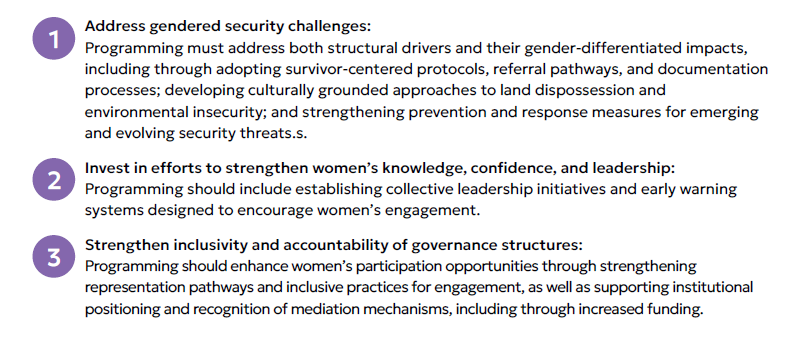
Recommendations for Women, Peace and Security Policy and Programming
Assessing the Impact of Women, Peace and Security Initiatives in Cambodia: A Baseline Study
This report presents the first phase of a longitudinal study (baseline) conducted in Cambodia.
Assessing the Impact of Women, Peace and Security Initiatives in Lao PDR: A Baseline Study
This report presents the first phase of a longitudinal study (baseline) conducted in the Lao PDR.
Suggested Citation:
Helen Stenger, Jacqui True, Katie Buchhorn, and Wilasinie Sopapol. 2026. Assessing the Impact of Women, Peace and Security Initiatives in Cambodia and Lao PDR: A Baseline Study. CEVAW
Last updated: Oct 2026